
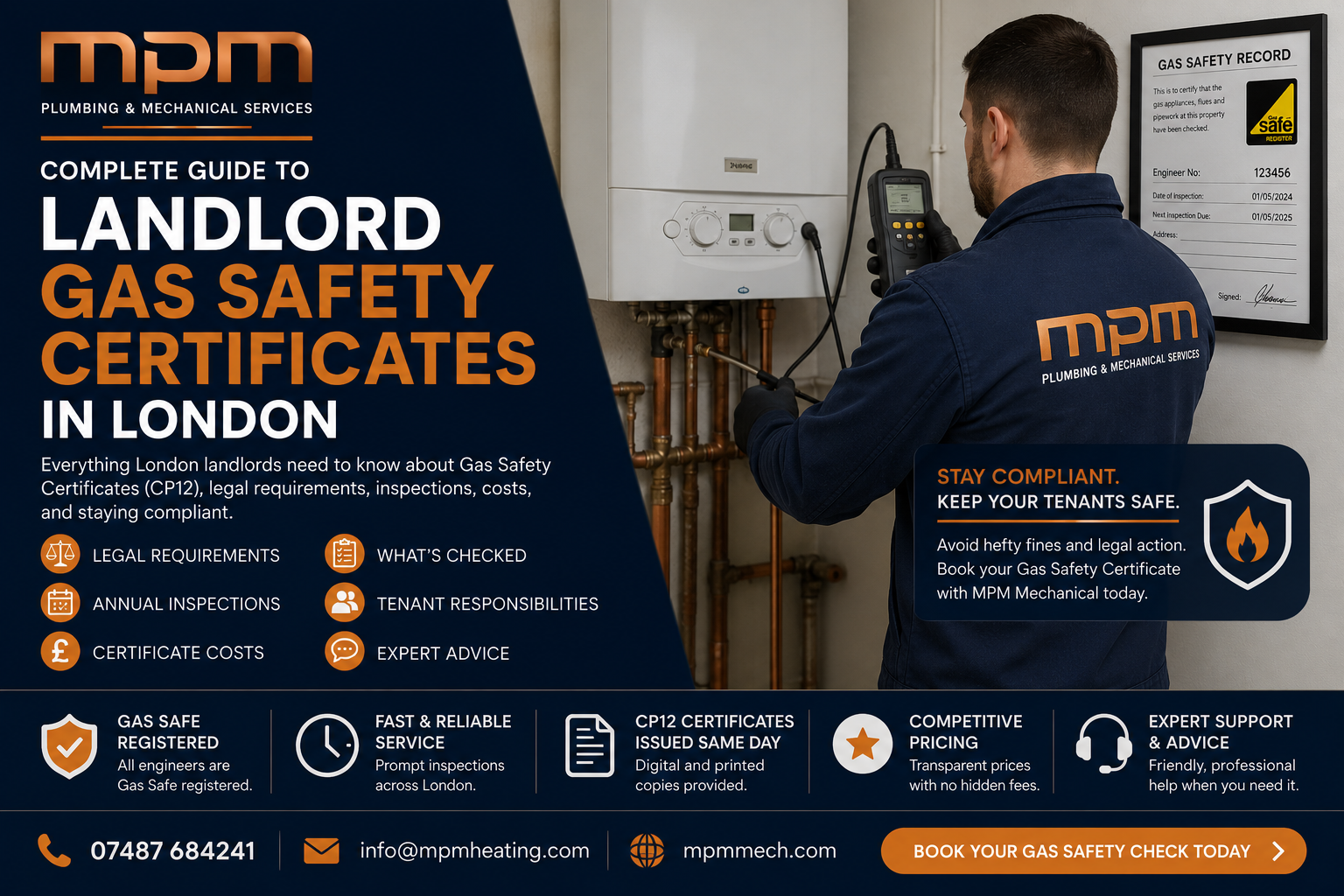
If you’re a landlord in London, staying on top of your legal obligations isn’t just good practice — it’s the law. One of the most important responsibilities you have is ensuring your tenants are safe from the risks of gas leaks, carbon monoxide poisoning, and faulty appliances. At the heart of this responsibility is the Gas Safety Certificate (also known as a CP12).
This guide covers everything you need to know: what the certificate is, who needs one, what’s involved, and how to stay compliant.
What Is a Gas Safety Certificate?
A Gas Safety Certificate (officially called a Gas Safety Record) is a document issued by a Gas Safe registered engineer after they have inspected all gas appliances, pipework, and flues in a rental property. It confirms that everything has been checked and is safe for use.
The certificate includes:
- Details of each appliance inspected
- The results of safety checks
- Any defects identified and actions taken
- The engineer’s Gas Safe registration number
- The date of inspection and when the next check is due
Is It a Legal Requirement?
Yes — absolutely. Under the Gas Safety (Installation and Use) Regulations 1998, all landlords in England (including London) are legally required to:
- Ensure gas appliances, fittings, and flues are maintained in a safe condition
- Arrange an annual gas safety check by a Gas Safe registered engineer
- Keep a record of the safety check for at least two years
- Provide a copy of the current Gas Safety Certificate to existing tenants within 28 days of the check, and to new tenants before they move in
Failure to comply can result in fines, prosecution, and in serious cases, imprisonment — not to mention the devastating human cost of a gas-related incident.
Who Can Carry Out a Gas Safety Check?
Only engineers registered with the Gas Safe Register are legally permitted to carry out gas safety checks in the UK. Always verify an engineer’s credentials before booking — you can check their registration on the Gas Safe Register website.
If you’re looking for a reliable, Gas Safe registered engineer in London, MPM Mechanical offers professional gas safety inspections for landlords across the city, with prompt service and fully compliant certificates issued on the day.
What Does a Gas Safety Check Involve?
During an inspection, the engineer will examine:
- Gas appliances (boilers, gas fires, cookers, hobs) — checking for correct operation, ventilation, and safe flue/exhaust
- Gas pipework — checking for leaks and corrosion
- Flues and chimneys — ensuring combustion gases are safely expelled
- Pressure and flow — verifying the gas supply is at the correct pressure
- Safety devices — confirming flame failure devices and other safety features work correctly
The check typically takes 30–60 minutes depending on the number of appliances.
How Much Does a Gas Safety Certificate Cost in London?
Prices in London typically range from £60 to £120, depending on:
- The number of gas appliances in the property
- The location within London
- Whether it’s part of a broader service (e.g., combined with a boiler service)
Landlords with multiple properties can often negotiate discounted rates for bulk checks.
How Often Do You Need One?
Gas safety checks must be carried out every 12 months. You can have the check done up to 2 months early without losing your original renewal date — a useful trick for scheduling convenience.
For example, if your certificate expires on 31 October, you can book a check as early as 1 September and still retain the 31 October renewal date for the following year.
What Happens If an Appliance Fails?
If the engineer identifies an unsafe appliance, they will classify it under the Gas Industry Unsafe Situations Procedure (GIUSP):
- Immediately Dangerous (ID) — the appliance will be disconnected immediately
- At Risk (AR) — the appliance should be taken out of use as soon as possible
- Not to Current Standards (NCS) — the appliance doesn’t meet current standards but is not immediately dangerous
Landlords must arrange repairs or replacement before the appliance can be used again. A follow-up check will confirm it’s safe.
Responsibilities for Different Tenancy Types
| Tenancy Type | Landlord Responsibility |
|---|---|
| Assured Shorthold Tenancy (AST) | Full annual gas safety check required |
| Houses in Multiple Occupation (HMO) | Full annual check + additional HMO licensing requirements |
| Short-term / holiday lets | Annual check still required |
| Commercial property with residential above | Residential areas must comply |
Tips for London Landlords
- Book early. Don’t wait until the last minute — good engineers get booked up, especially in busy periods like autumn when boilers are first turned back on.
- Keep copies. Store digital and physical copies of all certificates. If a tenant disputes something or a claim arises, your records are your protection.
- Combine with a boiler service. Annual boiler servicing and the gas safety check are two separate things, but many engineers offer both together, saving you time and often money.
- Inform tenants in advance. Give tenants adequate notice before an inspection — legally, 24 hours is the minimum, but more notice is always courteous.
- Use a trusted local engineer. In London especially, reliability and speed matter. Working with a company like MPM Mechanical that understands London’s rental market can save landlords significant hassle.
Carbon Monoxide Alarms — an Extra Layer of Protection
Since October 2022, under the Smoke and Carbon Monoxide Alarm (Amendment) Regulations 2022, landlords in England are required to install a carbon monoxide (CO) alarm in any room with a fixed combustion appliance (including gas boilers). These alarms must be tested and working at the start of each new tenancy.
CO alarms don’t replace gas safety checks — they work alongside them as a critical safety backup.
Summary Checklist for London Landlords
- Annual gas safety check by a Gas Safe registered engineer
- Certificate issued and stored for at least 2 years
- Copy provided to tenants within 28 days (or before move-in)
- Carbon monoxide alarms installed in rooms with combustion appliances
- Alarms tested at the start of each tenancy
- Any unsafe appliances repaired or replaced promptly
Final Thoughts
Gas safety is non-negotiable for London landlords. The consequences of neglect — legally, financially, and most importantly humanly — are too serious to ignore. Staying compliant doesn’t have to be complicated: book your annual check with a trusted Gas Safe engineer, keep your records in order, and make sure your tenants have the documentation they’re entitled to.
For professional, reliable gas safety inspections across London, visit MPM Mechanical to book your landlord gas safety certificate today.
FAQs – Landlord Gas Safety Certificates in London
1. What is a Gas Safety Certificate?
A Gas Safety Certificate, also known as a CP12, is an official document issued by a Gas Safe registered engineer after inspecting gas appliances, flues, and pipework in a rental property to confirm they are safe to use.
2. Is a Gas Safety Certificate legally required for landlords?
Yes. Under UK law, all landlords must arrange an annual gas safety inspection for rental properties with gas appliances and provide tenants with a valid certificate.
3. How often does a landlord need a Gas Safety Certificate?
A Gas Safety Certificate must be renewed every 12 months to remain legally compliant.
4. Who can issue a Gas Safety Certificate?
Only engineers registered with the Gas Safe Register are legally allowed to carry out gas safety checks and issue certificates in the UK.
5. What appliances are checked during a gas safety inspection?
The inspection usually covers boilers, gas cookers, gas fires, hobs, pipework, ventilation systems, and flues.
6. How long does a gas safety inspection take?
Most inspections take between 30 and 60 minutes, depending on the size of the property and the number of appliances being checked.
7. How much does a Gas Safety Certificate cost in London?
Prices typically range from £60 to £120, depending on the property size and number of gas appliances.
8. What happens if a gas appliance fails the inspection?
If an appliance is unsafe, the engineer may disconnect it immediately and advise repairs or replacement before it can be used again.
9. Do landlords need to provide the certificate to tenants?
Yes. Landlords must provide existing tenants with a copy within 28 days of the inspection and give new tenants a copy before they move in.
10. Are carbon monoxide alarms required in rental properties?
Yes. Landlords in England must install carbon monoxide alarms in rooms containing fixed combustion appliances such as gas boilers.
11. Can a landlord combine a boiler service with a gas safety check?
Yes. Many Gas Safe engineers offer combined boiler servicing and gas safety inspections, which can save time and money.
12. What are the penalties for not having a Gas Safety Certificate?
Failure to comply can result in heavy fines, legal action, invalidated insurance, and even imprisonment in serious cases.

