
District Heating
MPM Plumbing & Mechanical Services installs and maintains district heating networks for residential developments, mixed-use schemes, and commercial estates across London and the South East. We deliver reliable, efficient heat network solutions — from the energy centre through to every dwelling connection.
About This Service
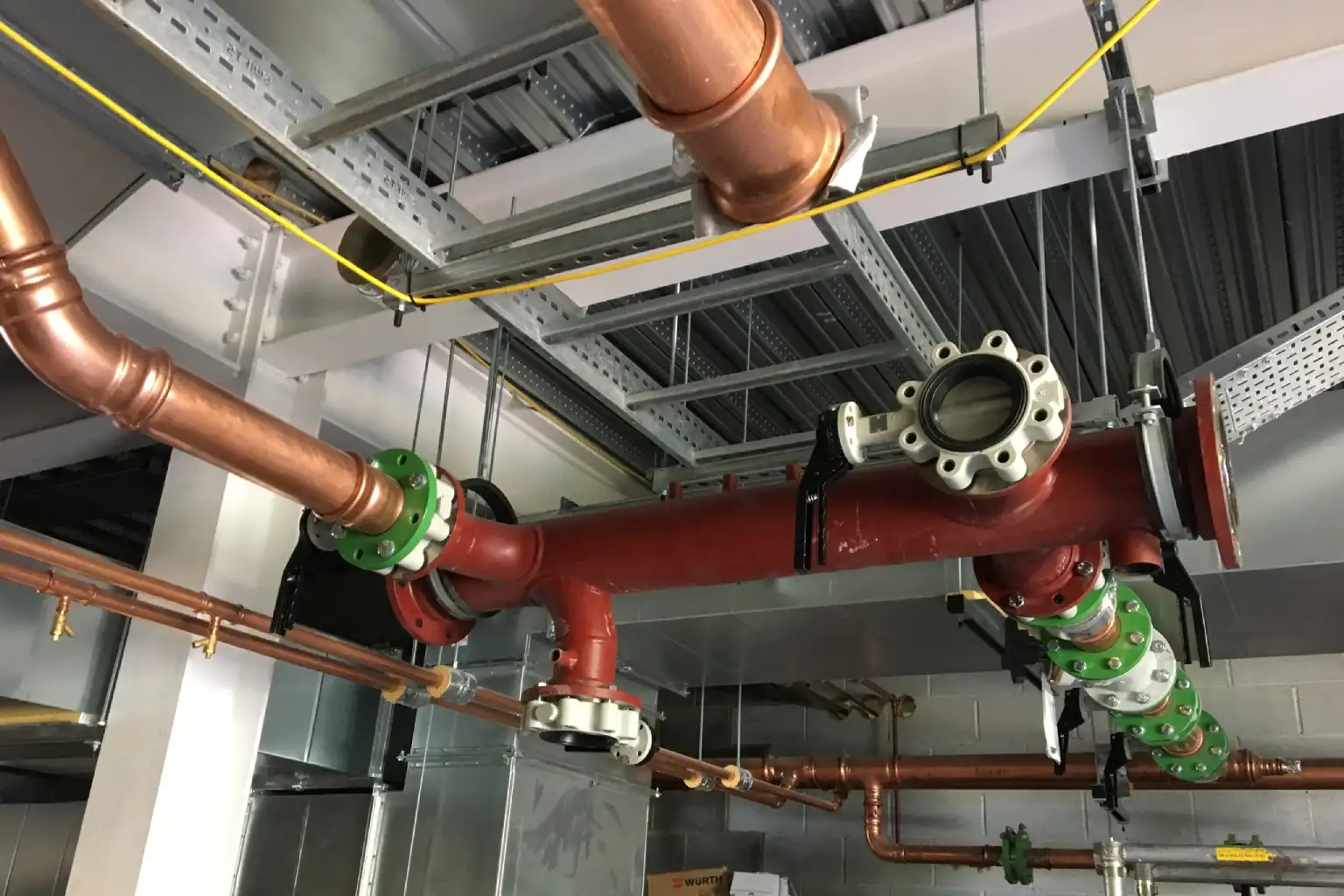
District heating — also known as communal or heat network systems — distributes heat generated from a central energy source to multiple buildings or dwellings through a network of insulated pipework. As the UK accelerates its transition away from individual gas boilers toward low-carbon heat networks, district heating is becoming an essential feature of new residential and mixed-use developments.
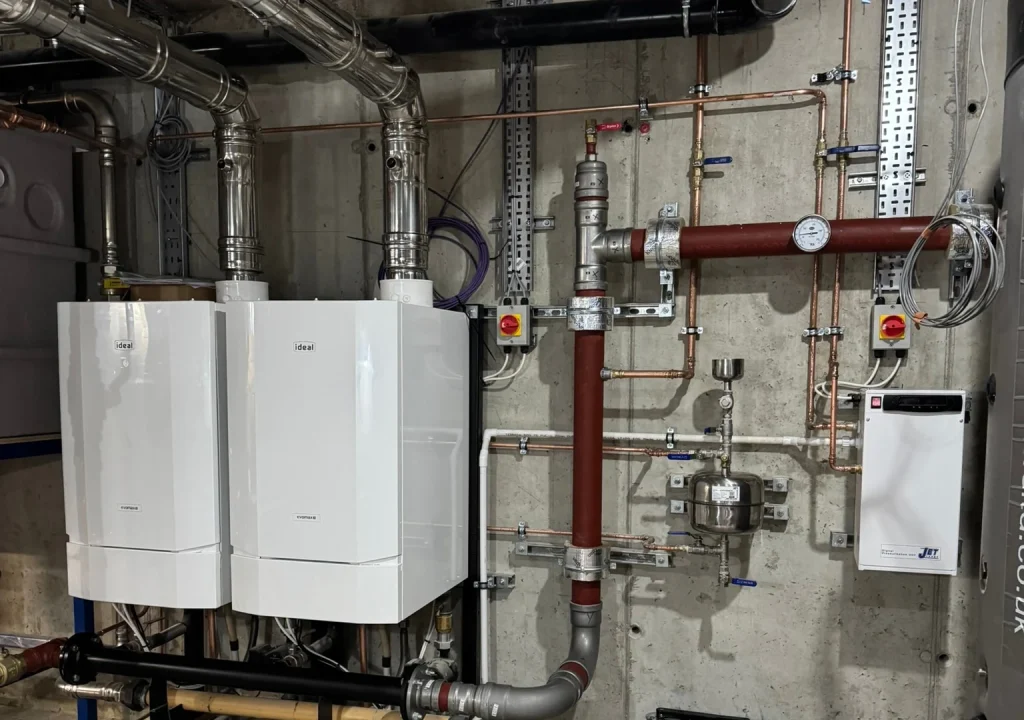
MPM manages the full mechanical installation of district heating systems, including primary and secondary distribution pipework, energy centre plant connections, and Heat Interface Unit (HIU) installations within individual apartments and properties. We work closely with energy centre contractors, main contractors, and developers to ensure pipework is installed in the correct sequence, properly insulated, balanced, and pressure tested — ready for commissioning on programme.
Our engineers have delivered district heating installations on landmark London developments including The Stage Residential and No. 3 Sheldon Square, demonstrating the depth of experience we bring to every heat network project.
What We Offer
- Primary and secondary distribution pipework installation
- Pre-insulated and above-ground pipework systems
- Energy centre plant and boiler connections
- Heat Interface Unit (HIU) installation and commissioning
- System balancing, flushing, and pressure testing
- Chemical dosing and water treatment
- Ongoing HIU servicing and network maintenance
Frequently Asked Questions
District heating generates heat in a central energy centre — typically using gas boilers, CHP, heat pumps, or a combination — and distributes it to multiple dwellings or buildings through a network of insulated flow and return pipes. Each property connects to the network via a Heat Interface Unit (HIU) rather than having its own boiler. This approach reduces maintenance responsibilities for residents, improves overall system efficiency, and makes it easier to decarbonise heat across an entire development in one step.
A Heat Interface Unit is the connection point between the district heating network and an individual dwelling. It transfers heat from the shared network into the flat's own heating and hot water circuits without the two systems physically mixing. MPM installs, commissions, and maintains HIUs across all unit types within a development, ensuring each one is correctly sized, set up, and handed over to the resident.
MPM installs both pre-insulated buried pipework for underground distribution routes and conventional insulated pipework for above-ground risers and distribution within buildings. We work from the energy centre plant connections through all riser and horizontal distribution pipework to the HIU connections in individual apartments, managing the full mechanical scope of the heat network.
Correct hydraulic balancing is essential for a district heating network to deliver consistent flow and temperature to every dwelling. MPM installs commissioning sets, balancing valves, and flow measurement devices at key points throughout the network, and carries out full hydraulic balancing during the commissioning process in accordance with the system design specification.
Yes. MPM provides HIU servicing, network inspection, and planned maintenance contracts for district heating systems post-handover. Regular maintenance keeps the network operating efficiently, ensures compliance with the Heat Network (Metering and Billing) Regulations, and protects the long-term performance of the system for residents and building managers alike.
Yes — MPM has delivered district heating mechanical installations on major London residential and mixed-use developments including The Stage Residential and No. 3 Sheldon Square. These projects required close coordination with main contractors, energy centre suppliers, and multiple trades across large, complex buildings — exactly the kind of environment our engineers are experienced working in.


